A balcony can support flowers, herbs and even vegetables with the right containers and plant choices. Balconies have particular conditions, including wind, weight limits and variable sun, that are worth planning for. This guide covers assessing the space, choosing containers and potting mix, suitable plants, and routine care.
Assess the space
Start by noting:
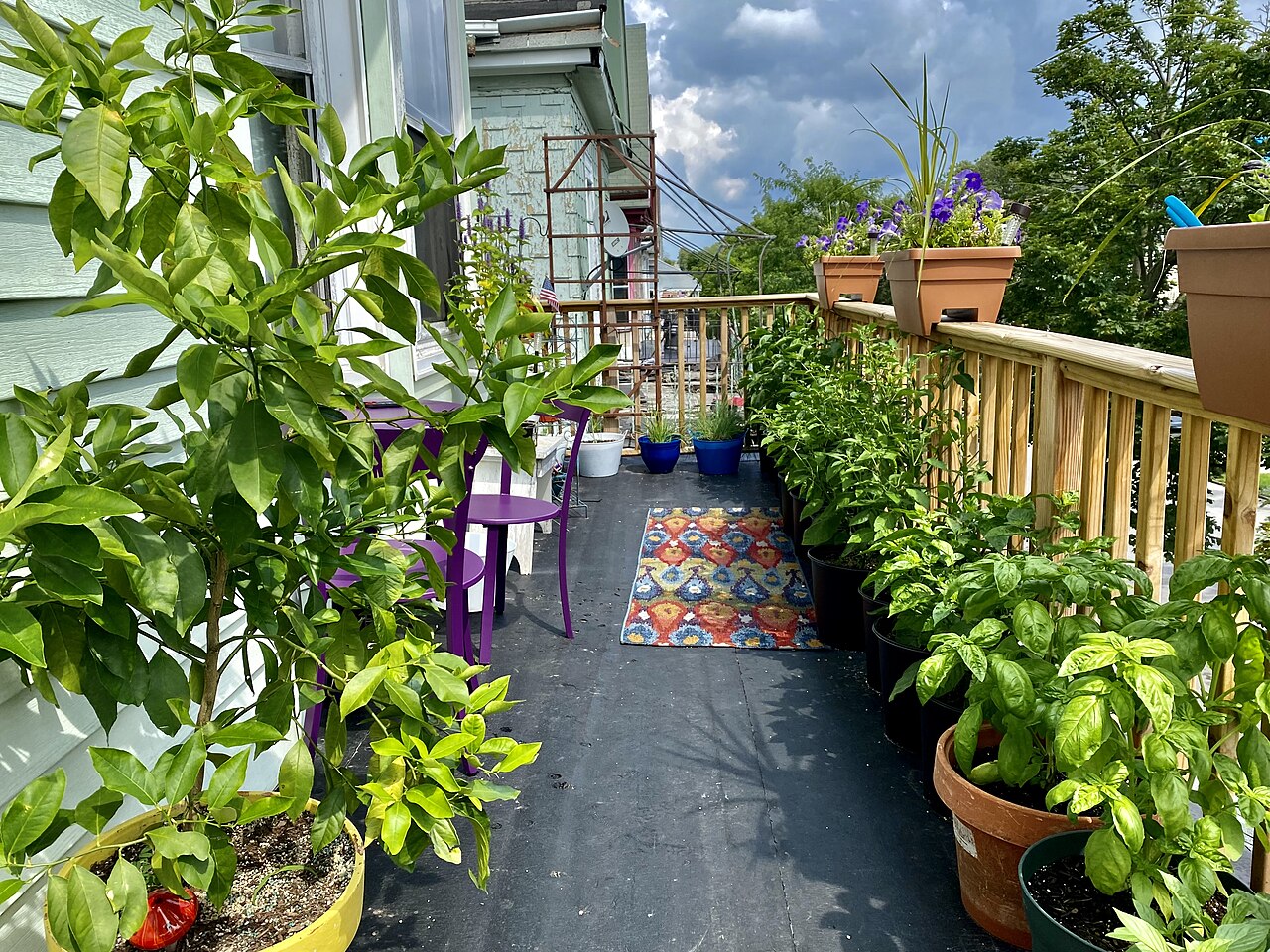

- Sun: how many hours of direct sun the balcony receives, and when
- Wind: higher floors and exposed corners can be very windy, which dries plants and can damage tall growth
- Weight: balconies have load limits; check with the building owner, manager or tenancy agreement if unsure
- Rules: some buildings restrict what can be placed on balconies or hung on railings
- Drainage: where water goes when it runs out of pots, and whether it will drip onto neighbours below
- Access to water: whether there is an outdoor tap or water has to be carried through the home
Weight and safety
Wet soil is heavy. A large container filled with moist potting mix can weigh considerably more than it appears. Keep heavy pots near walls or supports rather than in the middle of the floor, and spread weight out. Lightweight containers made of plastic, fibreglass or fabric, and lightweight potting mixes, reduce the load.
Secure railing planters properly, preferably on the inside of the railing. Anything that could fall from a height should be well fixed, especially on windy balconies.
Choosing containers
Almost any container works if it has drainage holes. Some considerations:
- Size: larger containers hold more water and dry out less quickly. Small pots may need watering more than once a day in summer.
- Material: terracotta is attractive but heavy and dries quickly; plastic is light and retains moisture; fabric grow bags are light and allow air to the roots.
- Colour: dark containers absorb heat and can overheat roots in full sun.
- Self-watering containers: have a reservoir that reduces watering frequency, useful when water must be carried.
Use saucers or trays to catch drips where needed, but empty them so roots are not left sitting in water.
Potting mix
Use a potting mix intended for containers rather than garden soil, which compacts in pots and drains poorly. Many potting mixes contain slow-release fertiliser; check the label to know when additional feeding is needed. Refresh or replace mix every year or two, as it breaks down and loses structure.
Choosing plants for sun levels
Matching plants to the available sun is the key decision.
- Full sun (six or more hours): tomatoes, peppers, chillies, aubergines (eggplants), beans, strawberries, rosemary, thyme, lavender, geraniums (pelargoniums)
- Partial sun (three to six hours): lettuce, spinach, chard, parsley, mint, chives, peas, fuchsias, begonias
- Shade (less than three hours): ferns, hostas, impatiens, some leafy greens
Vegetables that suit containers
Compact and dwarf varieties are bred for small spaces. Good choices include:
- Cherry and bush tomatoes
- Chillies and compact peppers
- Salad leaves, which can be cut repeatedly
- Radishes and short carrots in deep pots
- Dwarf French beans and climbing beans on a trellis
- Strawberries in pots or hanging containers
- Herbs of all kinds
Climbing plants trained up trellises or railings make good use of vertical space, though check building rules and wind exposure first.
Wind protection
Strong wind dries plants quickly and can break stems. Screens, trellis panels or sturdier plants placed on the windward side can shelter more delicate plants. Choose shorter, compact varieties for exposed balconies, and stake or support tall plants well.
Watering
Containers dry out much faster than garden beds, particularly in sun and wind. Check daily in warm weather by feeling the potting mix. Water until it starts to run from the drainage holes, and water in the morning or evening when cooler. Self-watering pots, larger containers and a layer of mulch on the surface can reduce how often watering is needed.
Feeding
Nutrients wash out of containers with regular watering. Fruiting plants such as tomatoes and peppers generally benefit from regular feeding once flowering begins, using a fertiliser formulated for them and following the label. Leafy greens and herbs need less.
Pollination
On high balconies, pollinators may be scarce. Including some flowering plants can attract bees. For fruiting crops, gently shaking tomato plants or brushing flowers with a small paintbrush can help set fruit.
Seasonal planning
Balconies can be productive across seasons: salad leaves and peas in spring, tomatoes and herbs in summer, and hardy greens or spring bulbs planted in autumn. In winter, containers may need protection from freezing in cold climates.
A sample first-year balcony
For a balcony with half a day of sun, a simple starting set might be: one large container with a bush tomato, a long trough of mixed salad leaves sown every few weeks, a pot each of parsley, chives and mint, and a hanging pot of strawberries. Add a couple of pots of flowering plants such as lavender or calendula to attract pollinators. That is enough to learn how much watering the space needs without overcrowding it.
Being a good neighbour
Water draining from balcony containers can stain walls or drip onto balconies below. Saucers, careful watering and avoiding overflowing pots help. Keep plants trimmed so they do not hang over neighbours’ spaces, and sweep up fallen leaves and potting mix regularly.
Making the most of vertical space
Wall-mounted planters, tiered stands and hanging baskets add growing space without taking up floor area. Keep heavier containers low and lighter ones higher, and remember that hanging containers dry out especially quickly in wind.
Summary
Plan around sun, wind and weight, choose containers with drainage, use proper potting mix, and match plants to the available light. With regular watering and feeding, a balcony can produce flowers, herbs and vegetables through much of the year.
Discover more from Gardening Stuff
Subscribe to get the latest posts sent to your email.