Plant labels and catalogues often list a hardiness zone, such as “zones 5 to 9”. These numbers are a useful shorthand, but they are easy to misread. This guide explains what hardiness zones measure, how to find yours, and what they do not tell you.
What a hardiness zone measures
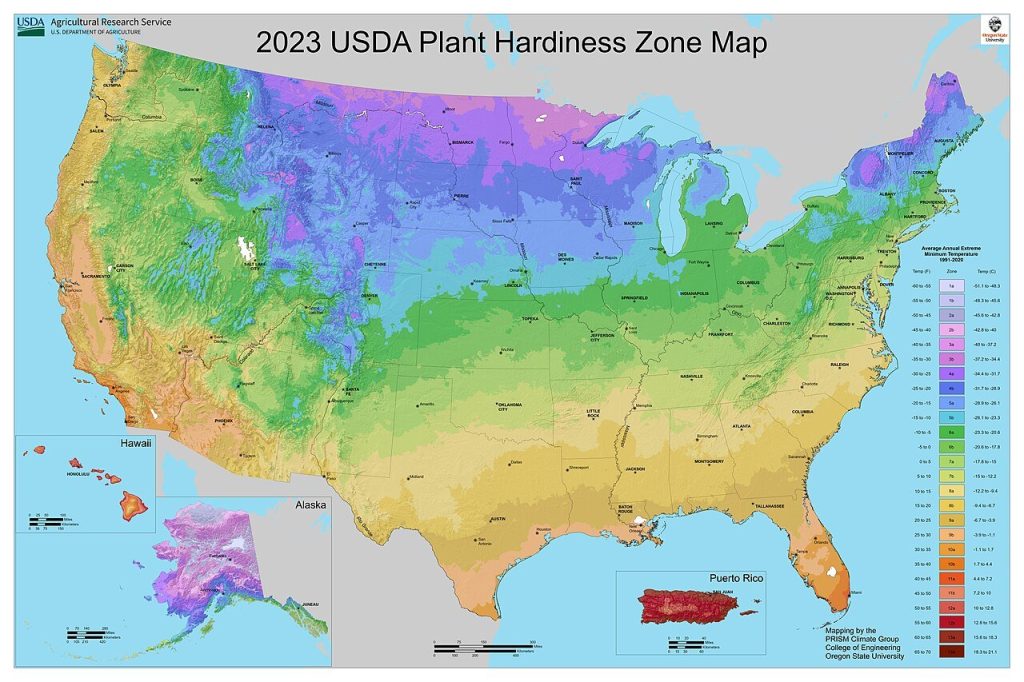
The most widely used system is the United States Department of Agriculture (USDA) Plant Hardiness Zone Map. It divides regions by their average annual extreme minimum winter temperature, which is the average of the coldest temperature reached each winter over a long period, usually 30 years.
Each zone covers a 10 °F (about 5.6 °C) band, and each is split into “a” and “b” halves of 5 °F each. Zone 1 is the coldest; higher numbers are warmer. A plant described as hardy to zone 6 is expected to survive the typical coldest winter night in zone 6 and warmer zones.

Other zone systems
Several countries use their own systems or adapted versions of the USDA approach. Canada’s map considers additional factors such as frost-free days and snow cover. The Royal Horticultural Society in the United Kingdom uses its own hardiness ratings, from H1 (needs heated glass) to H7 (very hardy). Australia and parts of Europe have their own maps as well.
When reading a label, check which system it uses. A number on a plant grown for one market may not translate directly to another.
How to find your zone
Most national agricultural agencies publish an interactive zone map. In the United States, the USDA’s map can be searched by postcode (ZIP code). Many extension services and gardening organisations also list local zones.
Maps are updated from time to time as new temperature data become available. The 2023 update to the USDA map, for example, shifted many areas into a warmer half-zone. If you looked up your zone years ago, it is worth checking again.
What zones do not tell you
Hardiness zones are based on winter cold alone. They say nothing about many other factors that decide whether a plant thrives:
- Summer heat and humidity
- Rainfall and drought
- Soil type and drainage
- Length of the growing season
- Late spring or early autumn frosts
- Wind exposure
- Snow cover, which can insulate plants
Two places in the same zone can have very different summers. A plant that is hardy enough to survive winter may still struggle with a hot, humid summer or with waterlogged winter soil, which kills many plants more reliably than cold.
Heat zones
To address summer conditions, the American Horticultural Society publishes a Plant Heat Zone Map based on the average number of days above 30 °C (86 °F). Some labels list both hardiness and heat zones. Heat zone ratings are less widely used, but they can help explain why a plant that should be hardy struggles in a warm region.
Microclimates
Conditions within a single garden can vary noticeably. A south-facing wall stores heat and may let you grow plants slightly beyond your zone. Low spots where cold air settles, known as frost pockets, can be colder than the surrounding area. Urban gardens are often warmer than nearby countryside because buildings and paving retain heat.
Paying attention to these microclimates lets you place plants where they are most likely to succeed. Many gardeners keep a simple minimum-maximum thermometer to learn how their own garden compares with the official figures.
Zones and annual crops
Zones matter most for perennials, shrubs and trees that must survive the winter outdoors. Most vegetables are grown as annuals and are planted after the cold has passed, so frost dates and season length are more useful for them than hardiness zones. Tomatoes, for instance, are grown successfully in a wide range of zones because they are planted after the last frost and harvested before the first.
Frost dates versus zones
Frost dates are related to zones but are not the same thing. The average last spring frost and first autumn frost set the length of the outdoor growing season, which determines whether long-season crops such as melons or sweet potatoes have time to mature. National weather services and extension services publish frost date estimates by location.
Using zones when buying plants
When choosing perennials, shrubs or trees, a practical approach is:
- Look up your zone using an up-to-date map.
- Choose plants rated for your zone or a colder one, especially for important or expensive plants.
- Treat plants rated only for your exact zone as slightly riskier, particularly in exposed spots.
- Consider other factors, such as heat, soil and drainage, using the plant’s description.
- Ask local nurseries or gardening groups which plants reliably survive in your area.
Containers change the picture
Plant roots in pots are more exposed to cold than roots in the ground. A common rule of thumb is that plants in containers may need to be hardy to a zone or two colder than your own if they are left outside all winter. Grouping pots together, moving them against a sheltered wall, or wrapping them can help.
Climate change and shifting zones
As average winter temperatures change, zone boundaries shift. This can widen the range of plants that survive winter, but it does not remove the risk of unusually cold spells. A single severe winter can still damage plants that have been fine for years. Choosing plants with a margin of hardiness remains a sensible approach.
Summary
A hardiness zone is a measure of typical winter cold. It is a useful starting point for choosing perennials, shrubs and trees, but it should be combined with knowledge of your summer conditions, soil, rainfall and microclimates. Local nurseries, extension services and experienced gardeners nearby are often the best guide to what will thrive where you live.
Discover more from Gardening Stuff
Subscribe to get the latest posts sent to your email.